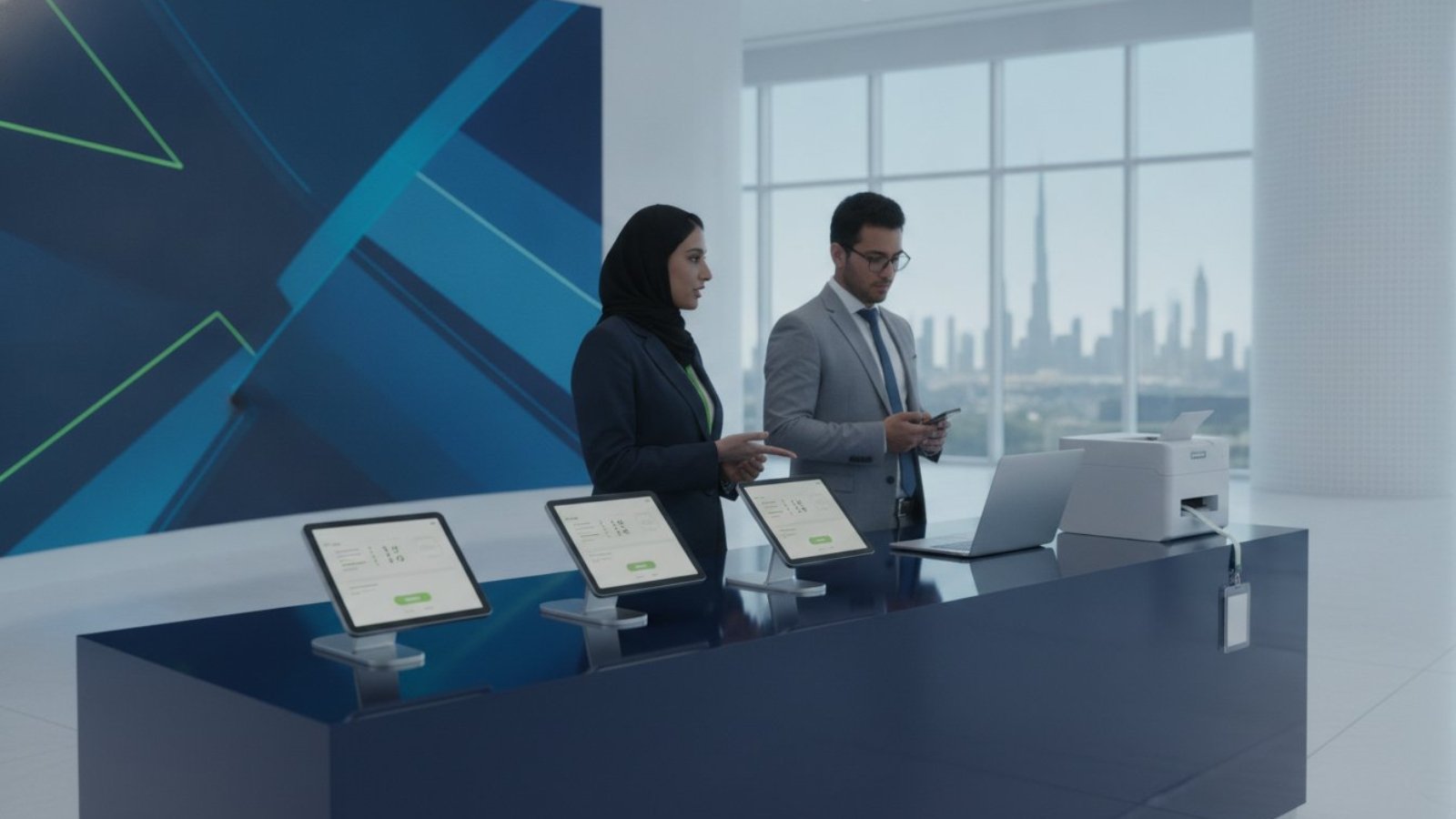
A thirty-minute queue at the registration desk isn’t just a logistical delay; it’s a direct hit to your brand’s reputation before the first keynote even begins. You’ve likely felt that spike of adrenaline when a badge printer jams or the Wi-Fi signal wavers during the peak morning rush. These technical hurdles don’t just stress your team. They disrupt the attendee experience and compromise the integrity of your data. Securing the right event registration equipment is the foundation of a professional, friction-free entry point that reflects your commitment to excellence.
We understand that high-stakes planning requires a technical partner you can trust. This article will help you master the technical infrastructure required for seamless attendee check-in and professional registration management. You’ll learn how to implement a plug-and-play registration desk setup that eliminates hardware failure and ensures every badge or lanyard looks polished. We’ll also cover how to maintain unbreakable connectivity and use real-time data tracking to stay ahead of the crowd. By the end of this guide, you’ll have a methodical roadmap for turning your registration area into a high-performance hub of efficiency.
Key Takeaways
- Build a high-performance check-in environment by selecting event registration equipment that functions as a synchronized, lag-free hardware ecosystem.
- Leverage professional iPad and laptop rentals to maintain speed and accuracy when managing large attendee databases during peak morning rushes.
- Secure dedicated event Wi-Fi to prevent synchronization failures and ensure your registration data remains updated across all devices in real-time.
- Engage expert technical staff to provide a “safe pair of hands” for on-site troubleshooting and professional registration management.
- Improve attendee wayfinding and communication by integrating LED screens for clear, professional instructions at the venue entrance.
The Anatomy of a Modern Event Registration System
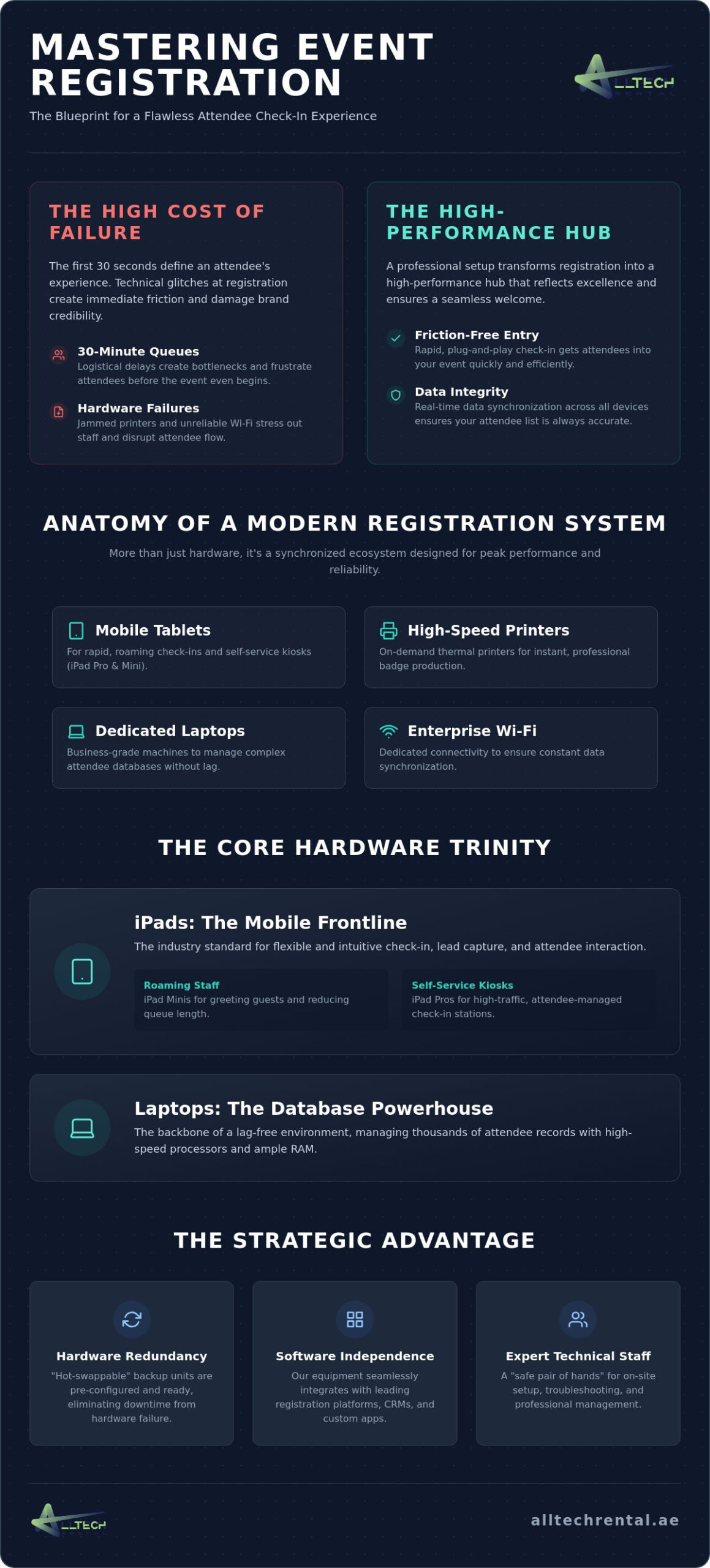
A modern registration system is far more than a collection of stand-alone devices; it’s a synchronized ecosystem where hardware and software work in perfect tandem. Within the field of Event management, the registration desk is the critical first touchpoint that sets the tone for the entire day. Industry experts agree that the first 30 seconds of an attendee’s arrival defines their entire event experience. If that window is filled with technical delays or confused staff, the brand’s perceived value drops instantly. By 2026, the standard has moved toward contactless, high-speed entry points that prioritize both safety and speed. To achieve this, your event registration equipment needs to be a cohesive unit of high-performance components:
- Mobile tablets for rapid, roaming check-ins.
- High-speed thermal printers for instant badge production.
- Dedicated laptops for managing complex attendee databases.
- Enterprise-grade networking gear to ensure constant data synchronization.
Why Hardware Reliability is Non-Negotiable
Technical downtime is a silent killer of event momentum. A five-minute lag during the morning rush creates a bottleneck that is difficult to clear. We recommend a proactive redundancy strategy using “hot-swappable” backup units. If a printer fails or a tablet loses power, a pre-configured replacement should be ready to take its place in seconds. This level of preparedness removes the stress from your team and the friction from your guests. Additionally, the visual impact of your hardware shouldn’t be overlooked. High-end, uniform devices help maintain a professional aesthetic that matches your corporate branding, signaling to every attendee that they’ve arrived at a premium, well-organized event.
Software Independence vs. Bundled Solutions
One of the biggest mistakes in event planning is getting locked into a rigid, proprietary system. We believe in software independence. Our event registration equipment is designed to integrate seamlessly with the world’s leading registration platforms. This flexibility allows you to use your preferred CRM or a custom-built check-in app without worrying about hardware conflicts. We prioritize cross-platform compatibility, ensuring that our iPad rentals and laptop hires communicate perfectly with your chosen software. This approach gives you the freedom to design the digital experience you want, backed by the stability of our professional-grade hardware. It’s about empowering your team with tools that adapt to your specific workflow rather than forcing you to change it.
Core Hardware: iPads, Laptops, and Professional Printers
The physical layer of your registration desk acts as the engine of attendee flow. While software handles the logic, your choice of event registration equipment determines the speed and reliability of every interaction. iPads have become the industry standard for mobile check-in due to their intuitive interface and portability. An iPad Mini is perfect for roaming staff who need to greet guests in the queue, while the iPad Pro offers the screen real estate and processing power required for fixed self-service kiosks. These devices provide the flexibility to adapt to changing crowd sizes in real-time.
Selecting the Right iPad Configuration
Choosing between handheld and kiosk modes depends entirely on your floor plan and expected attendee volume. For high-traffic exhibitions, iPad rental for events allows you to deploy multiple self-service stations that reduce the burden on your staff. These devices are also vital for lead capture, enabling exhibitors to scan badges and sync data instantly. Battery life is a critical factor for full-day exhibitions; we provide high-capacity power banks or floor stands with integrated charging to ensure your check-in stations remain active from the first guest to the last.
While tablets handle the interface, high-performance laptops are the workhorses managing your local database. When dealing with thousands of records, a standard consumer laptop can lag, causing frustrating delays. We provide business-grade laptops with high-speed processors and ample RAM to ensure that your attendee list remains responsive, even when multiple devices are syncing simultaneously. This processing power is the backbone of a lag-free environment.
On-Demand Badge Printing Technology
By 2026, the shift toward high-speed thermal printing has transformed on-site badge production. Unlike traditional inkjet printers, thermal units produce smudge-proof, high-quality badges in seconds. This speed is essential for maintaining momentum at the entrance. When you opt for event badge printer rental, you’re choosing technology that eliminates the need for expensive ink cartridges and reduces the risk of mechanical jams. Zebra printers are often the go-to for high-volume durability, while Epson models excel in vibrant color output for branded badges.
Integrating your physical branding with this digital hardware is the final step in a professional setup. Custom-printed lanyards paired with high-quality badge stock create a cohesive look that reinforces your brand identity. You can find creative ways to Spice Up Your Event Registration by using colors and textures that stand out. Ensuring your event registration equipment works in harmony with these physical assets creates a polished, premium feel. If you’re ready to upgrade your next check-in experience, consider exploring our full range of professional hardware hire solutions designed for seamless execution.
The Invisible Infrastructure: Event Wi-Fi and Connectivity
While hardware is the visible face of check-in, connectivity is the nervous system that keeps the entire operation alive. Standard venue Wi-Fi is notoriously unreliable for mission-critical tasks because it’s often shared with hundreds of attendees simultaneously. When the crowd starts browsing social media or streaming video, the bandwidth required for your event registration equipment to sync attendee records can vanish in an instant. This creates a bottleneck where tablets can’t verify registrations and printers can’t receive the data they need to produce badges. Relying on shared bandwidth is a risk that leads to database lag, frustrated guests, and a stressed registration team.
Security and redundancy are the two pillars of professional event networking. Protecting sensitive attendee data on public networks requires enterprise-grade encryption and dedicated VLANs. As of 2026, compliance with updated state-level privacy laws and CCPA regulations is non-negotiable for any high-risk data processing activities. We implement these security standards to ensure your registration process remains both fast and legally compliant. For uninterrupted service, we recommend dedicated 5G Wi-Fi kits that offer a seamless failover. If the primary venue line drops, these systems automatically switch to cellular data, ensuring your check-in flow never stops even for a second.
Bandwidth Planning for Registration
Calculating bandwidth for 1,000 or more simultaneous check-ins requires a methodical approach. You must prioritize registration traffic over general attendee browsing to ensure printers and tablets stay responsive during peak morning rushes. Wi-Fi 6 technology provides the increased capacity and reduced latency necessary to manage high-density 2026 events without the signal congestion common in older standards.
Hardware Networking Requirements
While wireless connections offer mobility, hardwired Ethernet is the superior choice for fixed badge printers to prevent packet loss. Setting up a Local Area Network (LAN) provides an essential offline backup, allowing your team to continue processing arrivals even if the external internet connection fails. This robust foundation is particularly important when integrating interactive event technology that requires constant, low-latency communication between multiple devices. By treating connectivity as a core component of your event registration equipment, you eliminate the single most common point of failure in modern event planning.
Technical Staffing: The “Safe Pair of Hands” Approach
Registration success depends as much on the people behind the desk as the technology on top of it. While general ushers are helpful for directing traffic, they often lack the specialized training to manage complex event registration equipment during a high-pressure morning rush. Technical registration staff act as the bridge between your high-end hardware and a smooth attendee experience. These professionals don’t just hand out badges; they proactively manage the technical ecosystem. They troubleshoot network sync issues, perform printer maintenance, and ensure every iPad remains connected to the central database. This specialized support significantly reduces the stress-load on event planners, allowing you to focus on the program rather than the peripherals.
The value of expert support is reflected in current industry standards. While basic event help may start at lower rates, mid-level professional technicians typically command between $40 and $75 per hour, with expert-level leads often exceeding $150 per hour. These figures highlight the technical complexity involved in modern event entry points. Investing in a “safe pair of hands” ensures that when a technical glitch occurs, it’s resolved in seconds rather than becoming a bottleneck that defines the morning. Proficient staff arrive on-site already familiar with the rented hardware, eliminating the need for last-minute training sessions during your setup window.
Roles of Professional Event Staff
A well-structured registration team divides responsibilities to maximize throughput. Technical Leads focus on the invisible infrastructure, managing the local network and ensuring printers remain stocked and calibrated. Registration Assistants focus on the attendee interface, using mobile iPads to process the queue and capture lead data. For a deeper look at building your on-site team, you can consult our guide on event registration staff hire for detailed role descriptions and planning tips.
Managed Services vs. DIY Rental
Choosing between a DIY rental and a fully managed technical setup often comes down to the scale of your event. A managed service includes the logistics of delivery, professional setup, and the final breakdown, ensuring a seamless handover between our technical team and your organizers. This “plug-and-play” approach means your registration desk is fully operational before your first staff member even arrives. It removes the risk of improper cabling or software configuration errors that can plague DIY setups. If you want to ensure your next entrance is handled with absolute precision, consider our professional event staff hire services to complement your hardware requirements.
Visual Impact and Next Steps for Your Event
The final phase of your registration strategy shifts from technical setup to visual execution and logistical finalization. While your hardware handles the data, the physical environment determines how attendees feel as they enter. A professional registration area should be intuitive, well-lit, and branded to reinforce the event’s prestige. Beyond the desks and tablets, you must consider the physical flow of people and the power requirements needed to keep your event registration equipment running at peak performance throughout the day. Proper desk layouts, ergonomic spacing for staff, and dedicated power drops are the final pieces of the puzzle that ensure a smooth start.
Enhancing the Registration Area with LED
Digital signage has replaced static banners as the standard for high-end wayfinding. Integrating LED screen rental into your registration hub allows you to display real-time schedules, welcome messages, and sponsor logos with high-contrast clarity. These screens serve a dual purpose: they direct traffic to open check-in counters and create an immersive entrance that starts the moment an attendee approaches the badge desk. By using dynamic visuals, you can update instructions instantly if a queue becomes too long or if a room location changes, keeping your guests informed and engaged without manual intervention.
Checklist for Success: 3 Months Out
Reliability is built on a foundation of early preparation. To ensure your event registration equipment is ready for the morning rush, we recommend following a methodical booking timeline. Starting three months before your event allows you to secure the latest hardware and coordinate the necessary infrastructure with your venue. Consider this essential checklist:
- 3 Months Out: Define your total attendee volume and specify your hardware counts for iPads, laptops, and printers.
- 2 Months Out: Conduct a venue site visit to confirm power supply locations and identify potential Wi-Fi dead zones.
- 1 Month Out: Finalize your badge designs and lanyard branding to ensure compatibility with thermal printing stock.
- 2 Weeks Out: Confirm technical staffing schedules and provide your registration software credentials to the setup team.
Requesting a Custom Quote
Specifying your requirements clearly is the best way to receive an accurate, comprehensive solution. When requesting a quote, provide details on your expected peak arrival times, the total number of check-in stations required, and any specific venue constraints. Choosing a single-vendor solution for your hardware, connectivity, and staffing eliminates the communication gaps that often lead to technical friction. All Tech Rental remains a leading choice for reliability in 2026 because we handle the entire technical lifecycle, from delivery and setup to on-site support. To get started on a tailored plan, ensure your next event is a success with All Tech Rental and secure the professional infrastructure your brand deserves.
Elevate Your Next Event Entrance
Mastering the technical infrastructure of your check-in area is a strategic investment in your brand’s reputation. A successful arrival experience depends on high-performance event registration equipment, unbreakable Wi-Fi connectivity, and the expert support of professional technical staff. By moving beyond basic hardware and implementing a synchronized ecosystem, you eliminate the risks of database lag and long attendee queues. It’s about creating a friction-free environment where technology supports your vision rather than hindering it.
We provide national UAE coverage for all major event venues, ensuring that professional-grade technology is accessible wherever your project takes place. Our managed rentals include 24/7 technical support and redundant hardware failovers as standard. This provides a “safe pair of hands” that remains unfazed by high-pressure environments. We’re committed to meticulous execution and human-centric service. Contact All Tech Rental for a seamless event registration setup and turn your next entrance into a hallmark of efficiency. We look forward to helping you deliver a polished, professional experience that starts from the very first scan.
Frequently Asked Questions
How many badge printers do I need for 1,000 attendees?
We recommend a ratio of one printer for every 200 to 250 attendees to maintain a steady flow. For a conference with 1,000 guests, deploying four to five printers ensures you can handle the peak morning rush without creating long queues. This setup provides enough capacity to process arrivals quickly while offering redundancy if one station requires a media refill.
Can I use my own event registration software with your rented hardware?
Yes, our hardware is entirely software-agnostic and designed to integrate with all leading global registration platforms. Whether you use a standard CRM or a custom-built check-in app, we ensure our iPads and laptops are configured for seamless compatibility. This flexibility allows you to keep your existing digital workflow while benefiting from our professional-grade hardware.
Do you provide on-site technical support throughout the event duration?
Yes, we provide professional event staff who remain on-site to manage every technical aspect of your registration desk. Our technicians handle the initial setup, monitor network stability, and perform real-time troubleshooting for hardware or software issues. This “safe pair of hands” approach allows your team to focus on guest relations while we manage the technical infrastructure.
What happens if the venue Wi-Fi is unreliable for registration?
We solve connectivity issues by providing dedicated event Wi-Fi services and 5G kits that operate independently of the venue’s shared network. This ensures your event registration equipment stays synchronized with your attendee database at all times. We also implement network failovers, so if one connection wavers, your registration desk automatically switches to a backup line without interruption.
How far in advance should I book registration equipment for a large conference?
We recommend securing your equipment at least three months before your event date. Early booking ensures the availability of specific hardware models, such as the latest iPad Pros or high-speed Zebra printers. It also provides our team with sufficient time to conduct site surveys, plan network layouts, and coordinate logistics with your chosen venue for a flawless execution.
Do you offer custom lanyard printing alongside badge printer rentals?
Yes, we provide professional lanyard printing services to complement our badge production hardware. You can choose from various materials and attachment styles to match your corporate branding and event theme. Combining custom lanyards with on-demand badge printing creates a polished, high-end look that reinforces your brand identity from the moment an attendee arrives at the desk.
Can you provide laptops and iPads pre-configured with our event apps?
Yes, we can pre-load and configure every device with your specific event applications or web portals before delivery. This “plug-and-play” service ensures your event registration equipment is ready for immediate use the moment it arrives on-site. We handle the technical heavy lifting, including software updates and security settings, so your staff can start checking in attendees right away.
What is the difference between thermal and inkjet badge printing?
Thermal printing is the industry standard for speed and reliability because it uses heat instead of ink to produce smudge-proof badges. It is significantly faster than inkjet and eliminates the risk of running out of expensive cartridges during a busy check-in period. While inkjet offers vibrant full-color capabilities, thermal printing is preferred for high-volume events where speed and durability are the top priorities.
Add a Comment